
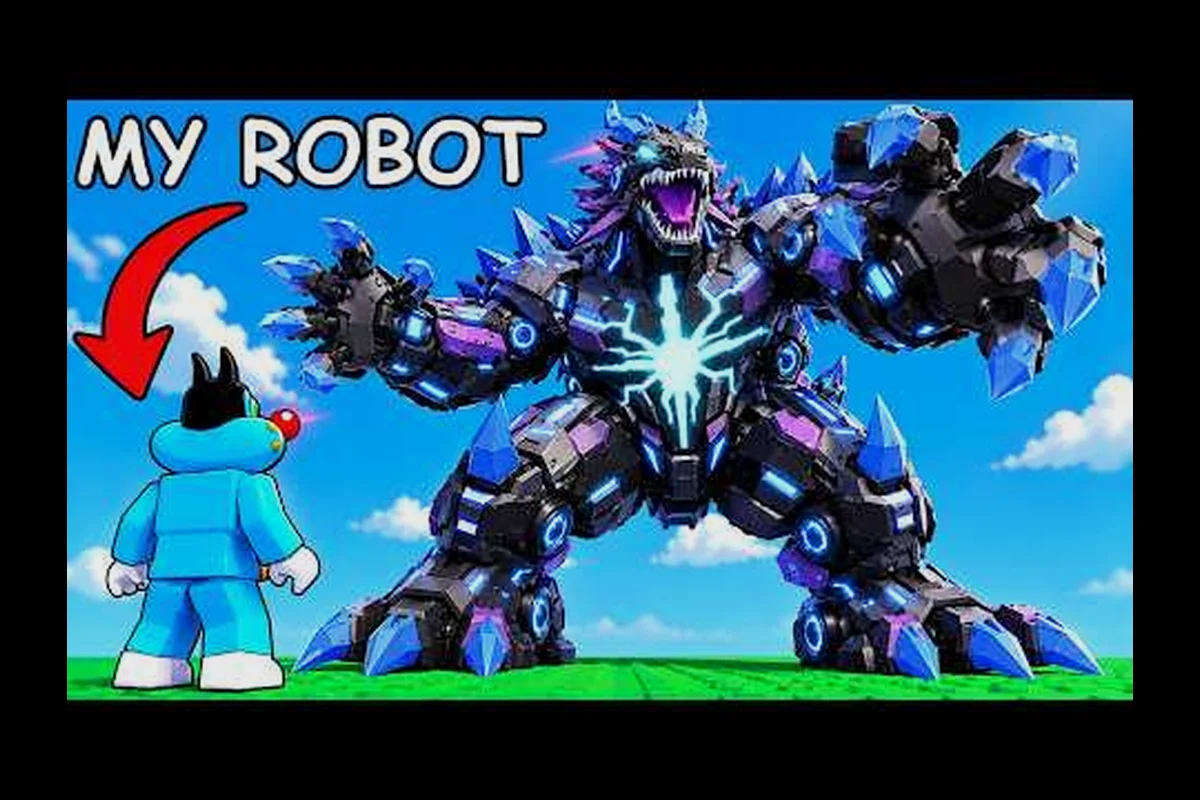
Steel Fighters Tier List 2026 rankings help you choose stronger robots and parts without wasting scrap. The guide highlights leading S-tier robots, A-tier contenders, premium components, and the most effective choices for competitive PvP. Rankings also reflect survivability, weapon damage, mobility, and build synergy, so a strong robot may perform differently once paired with the right armor, thrusters, and loadout. For example, a balanced S-tier fighter can outlast aggressive rivals in a long arena, while an A-tier robot with superior speed may gain an advantage by controlling space and creating openings for its weapon.
Steel Fighters Tier List 2026 Overview and Ranking Rules
The Steel Fighters tier list 2026 evaluates complete robot configurations rather than isolated components. A strong build needs reliable damage, survivability, and enough mobility to reach its target, while a premium head, torso, arms, or weapon only performs well when the surrounding parts complement it. The ranking below therefore separates robots and parts into practical roles instead of treating every early or late-game option as equally useful.
This approach matters because Steel Fighters is a Roblox simulation game built around assembling robots from more than 100 possible combinations, collecting scrap, upgrading parts, and challenging increasingly difficult floors. Those features are confirmed on the official Steel Fighters Roblox page, whose public launch information lists a September 7, 2026 release. The ranking also accounts for rebirth progression, which changes the strength baseline of a build after a reset.
Rating System
The tiers measure practical value in the current game environment. S tier means a build is highly effective when assembled correctly, while A tier means it remains competitive with a little more investment. Lower tiers are still useful for progression, especially when their lower cost makes them easier to upgrade.
| Tier | Competitive meaning | Best use | Main limitation |
|---|---|---|---|
| S | Exceptional performance in the right role | High-level PvP and difficult floors | Usually demands strong investment |
| A | Strong and flexible performance | General PvP, bosses, and team play | May need one supporting part |
| B | Reliable with conditional value | Early progression and farming | Falls behind optimized builds |
| C | Functional or narrow | Learning mechanics and filling slots | Limited upside at high levels |
| D | Weakly competitive | Temporary use or collection | Usually replaced quickly |
What Makes a Robot Competitive
Three broad tests separate durable contenders from flashy one-off builds. First, damage must remain useful when a robot meets resistance or a tankier opponent. Second, survival value must outlast the opponent’s burst window rather than depending on a perfect dodge. Finally, the build should have enough practical mobility to close distance, maintain position, or retreat while reloading.
| Evaluation test | What good performance looks like | Warning sign |
|---|---|---|
| Damage | Consistent pressure across several targets | One strong hit followed by a long recovery |
| Durability | Withstands repeated pressure without losing every part | Breaks after a single critical exchange |
| Mobility | Reaches opponents and avoids unfavorable angles | Excellent damage but cannot maintain pressure |
| Scalability | Becomes stronger after upgrades and rebirth | Performs well only at a low level |
| Synergy | Every component supports the same combat plan | Premium parts compete for the same role |
A broader Steel Fighters tier list is useful for comparing the wider roster, but this guide narrows its focus to robots that can shape 2026 PvP matches and support endgame progression. A top S Tier build must still satisfy the table’s five tests: repeatable damage, durability through repeated exchanges, usable mobility, scalability after upgrades and rebirth, and synergy between parts. For example, a robot that deals strong burst damage but loses its advantage after one exchange is less dependable than a balanced build that can pressure a target, reposition during reloads, and remain effective after several rebirth upgrades.
Best Steel Fighters S-Tier Robots for 2026
The strongest Steel Fighters S-tier robots combine broad damage with enough durability to survive mixed opponents. Rather than treating a robot as universally dominant, the best S-tier options excel when their intended role receives the right support. Some pressure opponents quickly, some outlast repeated attacks, and others control space while a larger ally absorbs damage.
Because the official listing does not publish a definitive competitive balance table, these placements are a competitive synthesis based on community testing, part values, and reported PvP performance. Treat them as recommendations for building a dependable roster rather than fixed rules that every server follows.
Offense-Oriented S-Tier Picks
Offensive robots perform best when their attacks can be used consistently. The Strike specialist category rewards high damage and attack speed, while the Precision striker profile favors stronger single-target hits. Both can punish slow approaches, although they still need enough protection to avoid being rushed down.
| Robot role | Why it reaches S tier | Recommended support | Main matchup condition |
|---|---|---|---|
| Precision striker | Delivers punishing bursts with a shorter punish window | Durable torso and mobility arm | Wins against slower defenders |
| Rushdown attacker | Pressure starts before the opponent establishes position | Light armor with balanced damage | Strong against ranged targets |
| Heavy hitter | Creates a powerful opening hit | Mobility parts to compensate for slower speed | Best against durable teams |
| Technical fighter | Combines equipment strengths with dependable uptime | Flexible part set | Adapts to several matchups |
Offense is only half the rating. A robot that lands excellent damage but loses every limb after one exchange is not truly elite; the burst window must last long enough to create another meaningful attack. In practical terms, a Precision striker should preserve enough armor and mobility-part HP to land a second punishing sequence, while a Heavy hitter needs a safer opening angle and a responsive escape after impact. This matters in the steel fighters tier list 2026 because consistent damage uptime can outweigh a larger single hit, especially against slow defenders or teams that can close distance quickly.
Balanced S-Tier Picks
Balanced robots are often the easiest S-tier choices to use in ranked play because they do not require a flawless counter. Their combination of attack uptime, survivability, and movement consistency lets them handle both aggressive and defensive teams without changing several parts between rounds.
| Strength profile | Best role | Why the balance works |
|---|---|---|
| Damage and durability | Anchor fighter | Remains relevant when several robots are needed |
| Speed and survivability | Skirmisher | Avoids losing before its damage accumulates |
| Range and stability | Zone holder | Can pressure enemies while preserving its core parts |
| Adaptability | Flex fighter | Recovers from unfavorable matchups without losing every exchange |
These are the robots to prioritize when a player wants one dependable option for ordinary PvP, bosses, and team battles. For exact unit names, stats, and a complete roster, consult the Steel Fighters robot list.
Steel Fighters A-Tier Robots and Strong Alternatives
Steel Fighters A-tier robots remain valuable because they are easier to build, scale effectively, or cover a specific weakness in a standard S-tier lineup. An A-tier choice can be better than an S-tier robot when it fits the remaining slot in a lineup, especially if the other robot already handles the opponent’s durability.
Community reports repeatedly separate raw power from practical consistency. A robot with a stronger theoretical damage ceiling may lose that advantage if its attack is easy to avoid, while a steadier design can keep applying pressure across a full round.
A-Tier Role Breakdown
The A tier contains several reliable archetypes. A mobile duelist can pressure vulnerable targets but struggles against heavy defense. A durable bruiser survives longer than most rivals, although it may lack the speed to finish them. A ranged controller creates space but needs protection against aggressive rushdown.
| A-tier robot type | Primary advantage | Preferred matchup | Weak matchup |
|---|---|---|---|
| Mobile duelist | Fast repositioning and quick attacks | Slow, ranged robots | Heavy anchors with wide coverage |
| Durable bruiser | High resistance to focused damage | Rushdown teams | Fast kiting builds |
| Ranged controller | Safe pressure from distance | Close-range attackers | Fast divers with strong pursuit |
| Balanced support | Covers gaps in the player’s lineup | Mixed enemy groups | Fully optimized specialists |
| Heavy specialist | Excels against low-resistance targets | Fragile opponents | Elite armored defenders |
A fully upgraded specialist normally outranks an underbuilt namesake, so duplicate robots do not create identical results. For example, the mobile duelist row favors fast repositioning against slow, ranged robots, yet that advantage disappears against a heavy anchor with wide coverage. Compare exact parts, upgrade levels, rebirth bonuses, weapon reach, and team composition before treating two units as equivalent; a single optimized part can also change an A-tier robot’s preferred matchup.
When A Tier Beats S Tier
An A-tier robot is the smarter choice when it fills a missing role without requiring extensive upgrades. It may also be the better option when your best S-tier unit is already assigned, your scrap budget is limited, or the current lineup has too much speed and not enough durability. The strongest PvP robot is therefore not always the highest-ranked unit in isolation.
Steel Fighters S-Tier Parts and Best Setups
Steel Fighters S-tier parts are best understood as role accelerators. A premium weapon can increase damage, but it will not compensate for a robot that cannot survive long enough to use it. Strong setups balance the head, torso, arms, and weapon so each component performs a distinct function.
The Steel Fighters legendary parts overview provides a deeper catalog, while the table below focuses on the combinations that most often shape a competitive build. Because individual values may change through balance updates, evaluate the current in-game stat panel before committing scarce materials.
Premium Part Roles
A competitive S-tier setup normally includes at least one part built for damage, one for durability, and one for mobility or reach. Extra copies of the same strongest part rarely provide the same benefit as covering a weakness, especially when the unit already clears early floors.
| Part slot | S-tier part function | Best pairing | Why it ranks highly |
|---|---|---|---|
| Head | Increases damage, control, or survivability | Paired with a stable torso | Improves the robot’s primary battle plan |
| Torso | Raises effective HP and protects core components | Balanced mobility parts | Prevents one exchange from disabling the build |
| Arms | Improves speed, reach, or attack consistency | Weapon that matches its timing | Reduces gaps between attacks |
| Weapon | Delivers the largest damage spike | Durable head or torso | Punishes mistakes when the hit lands |
High-Value Setups
The safest premium combination favors balanced damage, high effective HP, and reliable movement, giving a robot enough flexibility to handle both Stompy rushdown and ranged pressure without losing a critical engagement window. An aggressive setup trades armor for faster attack speed and stronger opening pressure, which is useful against fragile Stompy targets but risky against burst-focused bosses. A control build sacrifices raw speed and damage for positioning tools, letting the robot hold space, protect slower allies, and disrupt divers before they reach the back line.
| Setup | Damage profile | Survival profile | Best use |
|---|---|---|---|
| Balanced S-tier build | Consistent across targets | Strong | General PvP and bosses |
| Rushdown S-tier build | Fast, frequent pressure | Medium | Stompy and ranged teams |
| Tank S-tier build | Heavy but slower hits | Very strong | Surviving burst-focused enemies |
| Range S-tier build | High single-hit damage | Medium | Pressureing close-range divers |
| Control S-tier build | Moderate damage | High | Holding space with your team |
The S-tier label is a practical endorsement, not a reason to use identical parts on every robot. Role coverage usually creates more value than copying a single showcase build: for example, the Balanced S-tier build’s consistent damage and strong effective HP make it safer in general PvP, while a Range S-tier build can punish Stompy divers with high single-hit pressure. Against burst-focused bosses, the Tank S-tier build’s heavier, slower hits and very strong survival profile may outperform a faster setup, so a strong Steel Fighters tier list 2026 should guide loadout choices rather than flatten every S-tier robot into one fixed configuration.
Steel Fighters Best Robot for PvP and Matchup Strategy
Finding the Steel Fighters best robot for PvP requires comparing the opponent with your available lineup. There is no universal champion because armor, range, and speed all influence the exchange, and the server’s current balance can shift the result. The strongest build is the one that repeatedly creates a favorable matchup without relying on a single critical hit.
The Steel Fighters PvP tier list should therefore guide first choices, not automatic picks. For example, if an S-tier robot offers strong armor but limited attack range, bring it against aggressive, close-range opponents, while a faster A-tier robot can handle a tankier rival that closes distance too slowly. Treat tier placement as the starting point, then use a backup robot that covers its weak range, speed, or matchup.
Matchup Selection Guide
Aggressive opponents punish slow setups, while patient ranged teams make fragile rushdown builds ineffective. Use the table below to identify your opening choice, then adjust positioning according to the fight rather than relying on a fixed rotation. For example, against a heavy armored anchor, pressure fighters can force damage before the anchor establishes control, but bringing a teammate to split attention prevents that target from dominating the arena. Against ranged kiting, a durable bruiser with reach benefits from closing distance quickly, since fragile melee robots may never land a decisive hit.
| Enemy playstyle | Best opening response | Change if the plan fails |
|---|---|---|
| Aggressive rushdown | Durable fast robot | Retreat and switch to range |
| Heavy armored anchor | Fast striker or pressure fighter | Bring a teammate to split attention |
| Ranged kiting | Durable bruiser with reach | Close the distance quickly |
| Balanced standard team | Flexible all-rounder | Preserve your best counter for last |
| Control-heavy formation | Mobile attacker | Attack from an unexpected angle |
For the Steel Fighters best PvP robot, a balanced fighter is the safest general answer because it handles more matchups without a full rebuild. When the lobby is predictable, however, a specialist can be stronger than that dependable option: use a durable fast robot against aggressive rushdown, a durable bruiser with reach against ranged kiting, and a mobile attacker against control-heavy formations. The flexible all-rounder listed in the table is best when the enemy lineup remains unknown, since it preserves your strongest counter for the final round.
Practical Opening Sequence
Opening well also involves resource and positioning decisions. A player who spends every part immediately may have no answer to the second team, while a player who never upgrades can lose to the first serious opponent. A practical sequence keeps enough scrap to respond after observing the field.
-
Identify the dominant enemy role. Look for a tank, ranged controller, or fast attacker rather than judging the entire lineup by one robot.
-
Choose a role that can close the gap. Use reach against ranged teams and mobility against slow anchors, because positioning often matters more than raw damage.
-
Preserve one flexible option. Keep a balanced fighter or other adaptable unit ready for the enemy that counters your opener.
-
Attack weak links when the formation breaks. Team pressure is more effective when it removes a support unit or forces multiple enemies to rotate.
-
Upgrade the matchup, not the tier label. A slightly lower-tier robot with the correct parts can outperform an S-tier unit that cannot reach the target.
The Steel Fighters arena tier list is a useful companion when assessing floor, boss, and farming performance. In the 2026 rankings, a high-ranked S-tier robot can excel in the arena through survivability, reach, or balanced damage, but its value depends on the matchup: a durable fighter may hold the floor against slower tanks, while a mobile damage dealer can secure kills before a ranged controller establishes control. For PvP, the best robot is often the one that can switch targets and reposition after the opening exchange, so flexibility can outweigh a small advantage in raw damage. Arena progression also depends on farming efficiency and reaching milestone rewards quickly, making boss-ready stats and upgrade timing more useful than tier label alone.
Upgrading, Rebirthing, and Testing the Ranking
A ranking only reflects the configuration you can actually use. Steel Fighters includes part upgrading, scrap collection, rebirth progression, and team play, so the same robot can occupy different positions in a lineup. Before calling a build S tier, compare its upgraded stats, current rebirth multiplier, and practical matchup results.
The official game listing confirms that players can collect scrap in the Junkyard, upgrade parts, rebirth for stronger stats, and add robots to their lineup. A community walkthrough also highlights milestone floors around level 30 and beyond, where stronger robots become more valuable as enemy scaling rises. These mechanics make testing in controlled conditions more reliable than judging a fresh unit.
Upgrade Priority Checklist
When using the Steel Fighters tier list 2026 to judge an S Tier or A Tier robot, prioritize upgrades that remove the build’s clearest matchup weakness. For example, if a weapon swap cannot make contact because opponents keep their distance, a reach or movement improvement can turn an ineffective damage setup into a threatening one; conversely, adding weapon damage to a robot that is routinely interrupted will not help if it cannot remain active long enough to land another hit. This is especially important when comparing the Steel Fighters best robot for PvP candidates, where positioning, durability, and attack uptime often determine results more than a single inflated weapon stat.
-
Confirm the current tier: Compare the assembled robot against the Steel Fighters tier list 2026 rather than an outdated guide.
-
Upgrade the main damage source: Improve whichever part supplies the most important attack or weapon stat.
-
Repair the survival weakness: Add durability when a single exchange removes the robot’s ability to fight.
-
Improve positioning: Upgrade movement or reach when opponents repeatedly avoid direct contact.
-
Rebirth at the right time: Reset only after the new multiplier justifies the lost immediate progress.
-
Test a controlled match: Fight representative opponents before replacing several high-value parts at once.
Rebirth and Resource Planning
Rebirth can accelerate later progression, but resetting too early can leave the player short on scrap and parts. Community tutorials recommend accumulating enough experience before the reset and considering the available multiplier. A practical plan is to rebirth when the next power increase clearly improves the current robot’s ability to clear the next meaningful floor.
| Progress situation | Best decision | Reason |
|---|---|---|
| Current robot already clears content | Delay the reset | Preserve upgraded parts and scrap |
| New multiplier makes a large difference | Rebirth | The scaling gain offsets the reset |
| Parts are badly mismatched | Rebuild first | A multiplier cannot fix poor synergy |
| PvP is the main goal | Keep a proven team ready | Rebirth should not remove all counters |
| Farming is the main goal | Upgrade the core damage source | Damage improves scrap efficiency |
Never discard a working build solely because it appears outside the steel fighters tier list 2026. An S-tier robot can still outperform an A-tier robot when its weapon compatibility, chassis health, and armor match the current stage. For example, keep a proven PvP lineup intact while a farming build clears floors for scrap; the practical goal is consistent progression, broader matchup coverage, and a roster that can handle both PvP and endgame floors.
Steel Fighters Tier List 2026 Final Recommendations
The Steel Fighters tier list 2026 favors complete, well-balanced robot builds, not isolated power spikes. S-tier robots have the highest competitive ceiling, A-tier robots supply valuable flexibility, and S-tier parts work best when they fill a specific combat role. For PvP, the Steel Fighters best pvp robot is usually a balanced fighter with dependable damage and durability, while specialists should be saved for matchups where their speed, range, or burst can shine.
Before committing resources, check the current in-game stats, compare the robot with the active lineup, and test one change at a time. That simple discipline prevents the most common ranking mistake: assuming a premium part automatically makes the entire machine stronger than a coordinated, lower-cost build.
Frequently Asked Questions
What is the best robot in the Steel Fighters tier list 2026?
There is no single robot that wins every matchup, but a balanced S-tier fighter is usually the best general choice. It combines meaningful damage, survivability, and movement without demanding a perfect counter. A specialist can outperform that robot when its role matches the opponent, especially against a slow tank or a fragile ranged team.
Which Steel Fighters parts are S tier?
The strongest S-tier parts are the ones that improve your robot’s main combat plan while covering a weakness. A premium weapon needs protection and mobility, while a durable torso needs enough speed or reach to avoid being trapped. Compare exact in-game stats because balance changes and individual part values can vary by version.
Is an A-tier robot better than an S-tier robot for PvP?
Yes, when the A-tier robot fits the remaining lineup role better. A mobile A-tier fighter can be an excellent answer to a tank, while a durable unit may outlast a fragile S-tier attacker. Matchup quality, team composition, and available upgrades matter more than the tier label by itself.
What makes the best PvP robot in Steel Fighters?
The best PvP robot is dependable across several opponent types and can exploit at least one clear matchup advantage. Consistent damage matters, but reach, speed, and durability determine whether that damage is ever applied. Keep a flexible backup robot because the strongest opening pick will not remain effective against every team.