
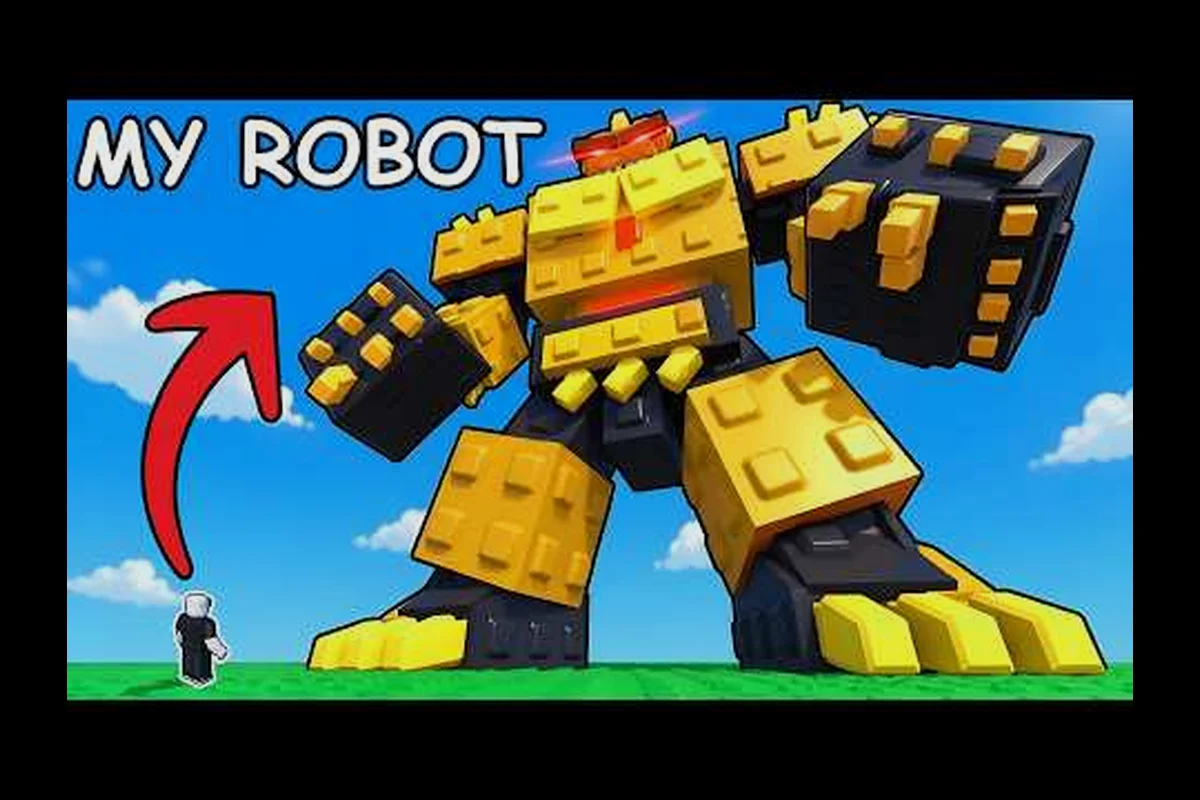
Choosing the strongest Steel Fighters robots matters because each floor advances the fusion and upgrade requirements, so a weak combination can become a bottleneck long before floor 30. Rare and legendary units should be evaluated by unlock cost, fusion compatibility, and permanent stat gains rather than rarity alone; for example, a secret robot with a difficult unlock condition is less valuable if its upgrade path competes with a more efficient rare unit. Comparing these attributes before investing resources helps preserve fusion parts and keep later floors manageable.
Steel Fighters Strongest Robot Overview
Steel Fighters uses a layered progression system: robots come from a catalog of more than 100 designs, each can be assembled from individual parts, and floor difficulty continues rising through the endless campaign. A strong robot is therefore not simply a rare unit with a large base stat. It is a machine whose parts, upgrade level, lineup, and rebirth bonuses all contribute to the damage and survival needed deeper in the run.
The official Steel Fighters game page on Roblox confirms the core loop: players mix and match robot parts, collect scrap, upgrade components, rebirth for stronger stats, and challenge increasingly powerful floors. That makes the Steel Fighters strongest robot question more useful than a simple rarity chart. A rare machine with poorly upgraded parts can trail a lower-rarity build that has been developed consistently.
Player guides also emphasize team size as a major factor around milestone floors. One VendoPlus progression video describes adding more robots to the lineup and improving each unit as the practical route to floor 30 and beyond, because enemy strength rises as the floor number increases.
| Priority | Robot quality | Main advantage | Best use |
|---|---|---|---|
| 1 | Legendary | Highest potential ceiling | Core damage and boss damage |
| 2 | Rare | Strong stat efficiency | Reliable floor progression |
| 3 | Hidden | Valuable if discovered | Surprise roster coverage |
| 4 | Secret | Event-dependent power | Limited-time or special goals |
| 5 | Starter | Low development cost | Learning and early floors |
There is no reliable public source for a definitive, patch-specific list naming every Steel Fighters legendary robot and assigning exact combat values. Rather than invent a tier list, this guide evaluates the strongest candidates by confirmed game systems, rarity value, part synergy, upgrade potential, and practical performance beyond floor 30. Any numerical balance or availability details should be rechecked against the current live build.
Rare Robot Picks for Floor 30+
A rare robot becomes valuable when it provides a stat combination that remains efficient after the enemies receive several scaling increases. Since Steel Fighters supports more than 100 robots, the catalog appears designed around part variety rather than one permanently dominant chassis. Head, torso, arm, and leg choices can be mixed, so two players using the same robot may still have very different results.
This makes Steel Fighters rare robots especially valuable for players who cannot yet access every late-game unlock. A well-upgraded rare unit can be easier to finish than an undeveloped legendary because upgrade levels and rebirth multipliers affect the whole machine. The robot-parts guide explains how component categories influence a build, while this article focuses on which completed machines give that system the strongest foundation.
Rarity Versus Final Performance
Rarity is a useful acquisition signal, but it is not a complete performance test. The Rarity Investment Bonus matters because a rare or legendary unit may contribute more raw power than a common robot with the same visible part quality. Even so, players should compare the full stat profile because a specialized machine with a weakness can be less dependable in the endless floors than a balanced build.
| Build trait | Why it matters after floor 30 | Example use |
|---|---|---|
| High base damage | Reduces time needed to defeat stronger enemies | Boss damage |
| Balanced survivability | Prevents a late fight from ending before damage is maximized | General progression |
| Useful attack speed | Can increase damage dealt during a short encounter | Burst-focused robot |
| High total power | Improves the contribution of every lineup slot | Endgame team |
| Flexible parts | Supports mixed-part progression | Resource-efficient runs |
There is an important distinction between the rarest available robot and the best robot for your account. A player with only one strong legendary unit may prefer a lineup of upgraded rares because multiple functional fighters can survive longer than one powerful unit surrounded by weak companions. By contrast, a veteran account with a broad roster can use the Steel Fighters strongest robot as the centerpiece of a larger team.
Which Rare Units Are Worth Prioritizing
The best candidates are rare robots with a strong complete stat package, not merely a memorable appearance. Because the official page confirms mixed-part builds and scrap-based upgrades, a robot becomes a dependable floor 30 companion when its weak categories can be corrected without replacing the entire machine.
Prioritize unlock order by checking each rare robot’s base stat package, damage type, and scrap-upgrade ceiling before committing resources. For example, a mixed-part robot that starts with low health but supports high-damage builds may be worth pursuing if its HP can be corrected with a small scrap investment; by contrast, a robot with excellent damage but prohibitive upgrade costs can perform worse in floor 30 than a more balanced unit. This comparison makes Steel Fighters rare robots easier to rank by practical survivability, upgrade efficiency, and role coverage rather than by rarity alone.
-
High all-around power for a dependable centerpiece.
-
Strong damage-to-cost efficiency so scrap is not wasted on poor scaling.
-
Good lineup value when the robot contributes meaningfully even without perfect upgrades.
-
Flexible part compatibility for players who must combine drops from different sources.
-
Clear specialization for bosses or unusually tough floors.
Players searching for Steel Fighters hidden robot and Steel Fighters secret robot units should still evaluate the same practical factors. A concealed unit can be impressive, but it is not automatically superior if its parts cannot be upgraded efficiently or if it duplicates a role already covered by the lineup.
Legendary Robot Evaluation Criteria
The Steel Fighters strongest robot discussion often becomes a rarity debate, but a legendary machine earns its place through effective power after upgrades. A legendary robot with strong base stats, good part compatibility, and a role that complements the rest of the team is more valuable than a shinier build that duplicates weaker units. The robot unlock requirements overview is useful for confirming how the broader roster becomes available.
The Four-Part Performance Test
Before calling a robot a top contender, examine the head, torso, arms, and legs as one machine. VendoPlus’s guide on building better robots with parts and upgrades describes mixed component sets, upgrade costs, and drops from floor chests, Golden Dice, and Junkyard runs. Those mechanics support a simple evaluation: judge the final build rather than the catalog label attached to it.
| Part slot | What to inspect | Warning sign |
|---|---|---|
| Head | Base power, secondary stat, useful bonus | Strong elsewhere but negligible contribution |
| Torso | Overall power and survivability | Damage high enough to expose major weakness |
| Arms | Damage output and attack efficiency | High damage with poor value per scrap |
| Legs | Speed, stability, endurance | Specialized effect that does not fit the floor |
| Complete set | Balance across all four slots | Two excellent parts covering two poor parts |
A strong Steel Fighters legendary robot should pass this test with only minor adjustments. Mixed sets can still outperform a poor matched set, but a complete build has a higher ceiling because valuable drops are immediately useful. That is especially important once every scrap purchase competes with rebirths, new lineups, and upgrades to several active robots.
Best Legendary Build Types
Balanced all-rounder: The safest choice for floor 30 and later because it protects against different enemy patterns. For a roster with several robotic units but no dependable core, prioritize one legendary robot that contributes useful attack, health, and armor rather than a specialist with a narrow bonus. A practical example is replacing three fragile damage robots with two balanced fighters and one support unit: this preserves offensive pressure while improving the team’s ability to survive sustained waves, making the setup stronger for the Steel Fighters strongest robot goal.
Maximum-damage machine: Best when fights are won by eliminating an enemy before its attacks become dangerous. High attack speed lets this Steel Fighters legendary robot close distance and trigger upgraded arms more often, while damage bonuses determine how quickly it can remove a priority target. Keep enough stability or health to survive the approach, but sacrifice some team-wide utility for faster takedowns; for example, place this damage dealer opposite weaker units so its burst can eliminate a dangerous attacker before that unit threatens the formation.
Endurance specialist: Useful when a player reaches later floors with strong damage but fragile robots. Stability or survivability can extend the team’s effective staying power by absorbing hits that would otherwise remove a damage dealer before its next attack cycle. For example, pairing one endurance-focused robot with two fragile attackers can preserve their damage windows across longer waves, making it a practical Steel Fighters legendary robot option without requiring a completely new catalog chase.
Support-oriented specialist: Valuable when its bonuses improve the performance of neighboring units, especially if attack, health, or armor bonuses activate automatically for the active formation. A Steel Fighters legendary robot with a lower personal damage rating can still outperform a stronger solo unit if its passive bonus covers two teammates; for example, place it between two high-damage robots so both receive the same stat boost before a difficult wave. Confirm that the bonus affects adjacent or allied units rather than only the equipped robot, then test the lineup against the wave’s boss mechanics.
The Roster Synergy Bonus deserves special attention. A team containing several complementary robots may outperform a stack of identical solo performers, so the practical Steel Fighters strongest robot is often the unit that makes the entire formation stronger. Keep two combat-oriented choices available for difficult encounters and add a flexible specialist when available.
Secret and Hidden Robot Acquisition
Secret and hidden machines are appealing because they can add unique stats, animations, or collection value to an account. However, confirmed information about exact availability is limited. The official game page confirms a catalog of more than 100 robots, while community reports describe special rewards and progression unlocks, but the current live game should remain the final authority for which units are obtainable.
For anyone investigating Steel Fighters secret robot possibilities, use a source-based checklist: cross-check the robot’s name, rarity tier, and parts requirements against the live catalog, then compare community reward reports for evidence of Steel Fighters rare robots, Steel Fighters legendary robot, or genuinely Steel Fighters hidden robot units. Treat a “strongest robot” claim as unconfirmed unless its base stats, upgrade path, and current obtainability can all be documented; a high-tier machine may still be unobtainable, event-locked, or dependent on limited Golden Dice and floor-chest rewards.
-
Check the live catalog and the current event or reward notices.
-
Examine floor chest rewards after clearing milestone floors.
-
Test Golden Dice rewards when available.
-
Complete Junkyard runs and review the scrap and part rewards.
-
Compare the machine’s parts with the units already in the roster.
-
Upgrade one complete robot before spreading resources across several incomplete units.
What Makes a Hidden Robot Valuable
A hidden robot is not merely one that takes longer to obtain. Its value depends on how well it fills a missing role. If the current lineup lacks endurance, a durable hidden machine may be more useful than a maximum-damage unit already represented twice. If every early robot has already been obtained, collection value rises, but floor performance still depends on upgrades and team composition.
| Acquisition route | What to verify | Best approach |
|---|---|---|
| Floor chest | Drop chances and milestone requirements | Clear floors efficiently and record rewards |
| Golden Dice | Number of rolls and reward pool | Use enough rolls to compare several outcomes |
| Junkyard | Scrap, parts, and chance rewards | Improve the run before expecting a rare drop |
| Event reward | Current event dates and eligibility | Check the event page before grinding |
| Group or code reward | Account eligibility and expiration | Redeem while the reward is active |
Keep an eye on official group announcements as well. The WeShowProjects group page has been associated with robot and part rewards, although community information also warns that reward hooks can change. Treat these as temporary opportunities rather than permanent guarantees.
Getting Robots and Upgrading Their Parts
Steel Fighters players can improve a robot in two ways: obtain a better machine or make the current machine stronger. The second option often produces faster progress because Steel Fighters allows individual parts to be upgraded with scrap and cash. This is why a polished common build can outperform a neglected rare machine during a floor 30 push.
Resource Route for Stronger Robots
A dependable progression cycle starts by clearing floors, collecting scrap, and opening eligible rewards. The player then upgrades the components that limit current performance before moving to a larger lineup. The scrap collection guide covers the basic earnings loop, while the following sequence focuses on turning those resources into stronger fighters.
| Order | Action | Reason |
|---|---|---|
| 1 | Clear repeatable floors | Earn scrap and cash consistently |
| 2 | Open available chests and dice rewards | Add free potential power |
| 3 | Identify the weakest part slot | Avoid spending on already-strong areas |
| 4 | Upgrade the limiting components | Raise overall combat effectiveness |
| 5 | Test the completed build | Confirm the robot performs as expected |
| 6 | Expand the lineup | Add coverage for tougher floors |
The Component Upgrade Multiplier makes repeated upgrades more valuable, while the Rebirth Stat Multiplier provides a reason to return to earlier floors. Because both systems compound, upgrading before a rebirth and continuing afterward is generally more effective than postponing all development until the account is “ready.”
Should Every Part Be Upgraded Equally?
No. Equal upgrading is efficient only when the robot’s stats are already balanced. A damage-focused machine often benefits first from upgraded arms, while a fragile unit may need legs or torso improvements before it can survive long enough to use its attack power. A complete build that performs well in practice is more valuable than a display of high upgrade numbers on one slot.
| Current problem | Upgrade priority | Result |
|---|---|---|
| Robot loses most fights | Legs or torso | Better survival time |
| Fights last too long | Arms or head | More damage per engagement |
| Performance drops after rebirth | Rebirth bonuses first | Stronger account-wide scaling |
| One robot cannot clear floors | Complete a second lineup slot | More tactical coverage |
This is also why the best answer to Steel fighters how to get robots is broader than collecting one rare unit. Work through floor rewards, account milestones, special drops, and eligible group rewards while strengthening each new addition. A wider roster gives you more stat combinations and reduces the impact of a robot that performs poorly against one floor type.
Floor 30+ Lineup Strategy
Reaching floor 30 is less about bringing one oversized robot than building a team that can survive the enemy scaling curve. VendoPlus’s floor progression guide focuses on robot count, upgrades, and team play as the practical reasons milestone floors become difficult. That aligns with the official structure: endless floors contain stronger bosses, and players can improve both their machines and their rebirth multipliers.
Build Around the Fight, Not the Rarity
Prepare at least two functional groups instead of committing every resource to one display team. A balanced progression team can handle ordinary floors, while a boss-oriented team uses higher-damage robots for dangerous encounters. Keep the boss group flexible enough to change when a specific weakness makes one configuration ineffective.
| Lineup role | Ideal qualities | Main purpose |
|---|---|---|
| Main damage | High attack output and attack speed | Defeat high-health enemies |
| Stable anchor | Strong survivability and balanced stats | Survive the opening exchange |
| Flexible specialist | Useful bonus or complementary part set | Improve team performance |
| Secondary damage | Redundant damage output | Recover from a failed primary setup |
| Reserve | Fully upgraded but less-used robot | Replace a unit that is countered |
The Floor Scaling Window is the key reason a broader roster matters. Enemy power increases as floors progress, so a unit that clears floor 20 comfortably may become inefficient at floor 30. Rotate the lineup as the difficulty rises, and test robots before committing the strongest reinforcements to a difficult floor.
A Steel Fighters hidden robot can serve as the hidden gem of this approach if it covers a role the lineup lacks. Conversely, a Steel Fighters secret robot is not worth delaying progress for if obtaining it depends on a limited event or uncertain drop condition. Advance with the machines available now, then improve the roster when new rewards arrive.
When to Rebirth
Rebirth becomes more attractive as the account-wide stat multiplier improves. If a robot performs poorly before rebirth, investing every remaining scrap into it may be less effective than resetting the account, earning the multiplier, and rebuilding stronger units. The faster leveling guide provides additional progression tactics for players who want to improve the pace.
Rebirth is most valuable when its account-wide stat multiplier offsets the progress lost from replacing upgraded robots. For example, if a floor 30 team relies on one rare or legendary robot with heavy scrap invested, compare that unit’s boss damage and clear speed against the faster rebuild enabled by a larger rebirth multiplier. The right choice is not always the unit with the highest headline power: a weaker robot may be worth keeping if it reaches the next floor milestone sooner and lets the team farm upgrade materials without rebuilding from zero.
-
Rebirth sooner when the new multiplier materially improves weak robots.
-
Delay slightly when current upgrades will soon push the team through another floor milestone.
-
Compare the team’s clear speed before and after rebirth, not just the number displayed in the menu.
-
Avoid spending premium currency until its effect on the whole account has been considered.
Ultimately, the best floor 30 team is the one whose clear time, survival, and boss damage improve together. A single robot may produce the highest headline power, while the Steel Fighters strongest robot in practical play is often the one that turns a difficult group fight into a consistent clear.
Frequently Asked Questions
What is the Steel Fighters strongest robot?
The strongest robot is the one with the best upgraded stats, effective survival, and synergy with your lineup—not simply the rarest catalog entry. Compare complete part sets, upgrade costs, rebirth multipliers, and performance from floor 30 onward. A legendary unit can excel when fully developed, but an upgraded rare robot may be more reliable early in a stronger progression push.
Are rare robots better than legendary robots in Steel Fighters?
Rare robots can outperform legendary robots when their upgraded parts provide better stat efficiency or fill a missing lineup role. Legendary machines usually have a higher power ceiling, but acquisition time, upgrade requirements, and duplication within the team also matter. Prioritize complete, balanced builds and reserve premium resources for units that improve the roster’s weakest category.
How do players obtain different robots in Steel Fighters?
Robots can come from floor chests, Golden Dice rewards, Junkyard runs, progression rewards, and eligible group or code events. The current catalog and live event pages are the most reliable source for availability. Players seeking Steel Fighters hidden robot or Steel Fighters secret robot units should verify current reward conditions, since limited-time notices and reward hooks can change.
Should every robot be upgraded to maximum level?
No. Upgrade the parts that limit the robot’s performance first, such as arms for insufficient damage or legs and torso for poor survival. The component upgrade multiplier makes repeated investment valuable, but balanced progress is usually better than maxing one slot while neglecting the rest. Test the completed build after each important upgrade.
What is the best way to reach floor 30 and beyond?
Build a lineup of complementary robots, keep one damage-focused and one stable combat option, and continue upgrading parts as floors scale. Clear repeatable floors for scrap, claim available rewards, and rebirth when the account-wide multiplier would meaningfully improve the whole team. One exceptional robot helps, but broader coverage usually makes late floors more consistent.